Summary
Antibody developability predictions from computational models are highly sensitive to the method used to predict the structure ((1), Victor Greiff’s EMBL-EBI presentation, 2024). The use of short MD simulations can be used to partially offset this and will lead to distributions of predictions that match experimental distributions, but it’s unclear if this is addressed at the per-antibody level.
Figures
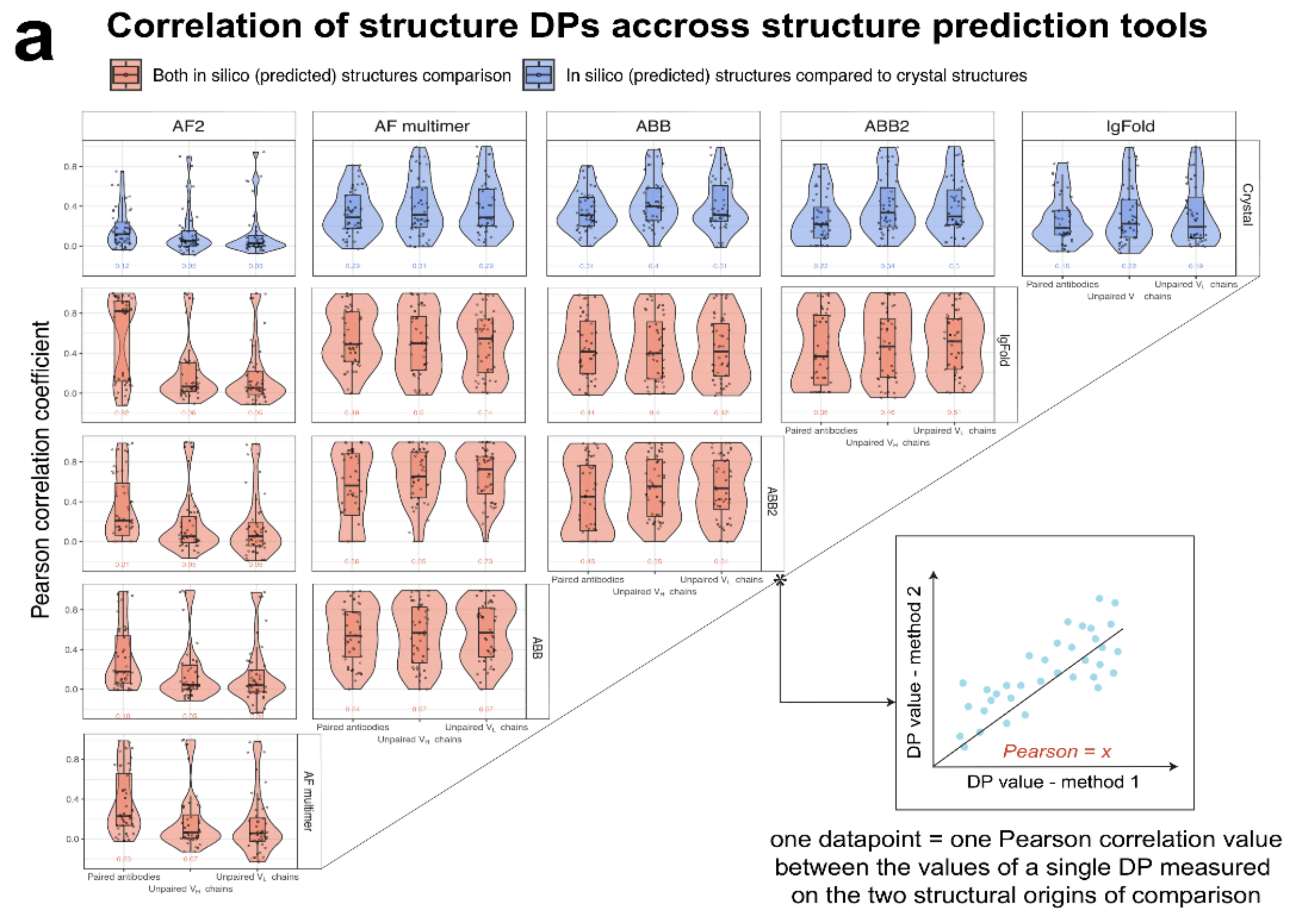
Ref (1)
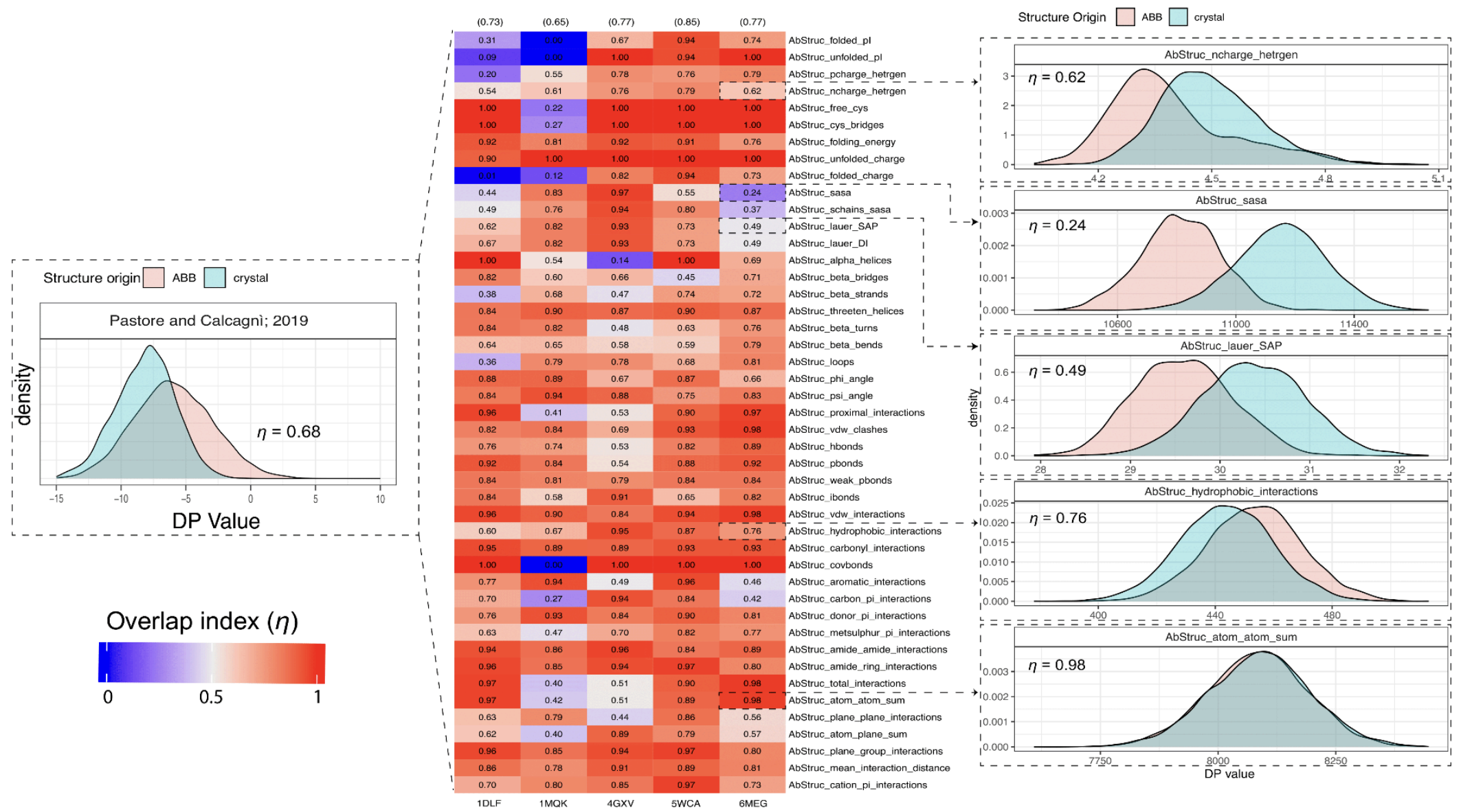
Ref (1)
See also
- Antibody developability parameters predicted from sequence are more correlated with each other than those predicted from structure
- Features for antibody property prediction derived from MD simulations outperform those from language models and static structures
- Deep learning methods produce different CDRH3 conformers
1.
Bashour H, Smorodina E, Pariset M, Zhong J, Akbar R, Chernigovskaya M, et al. Biophysical cartography of the native and human-engineered antibody landscapes quantifies the plasticity of antibody developability. Communications Biology. 2024;7(1). Available from: https://doi.org/10.1038/s42003-024-06561-3