Interleukins are one of the major types of cytokine.
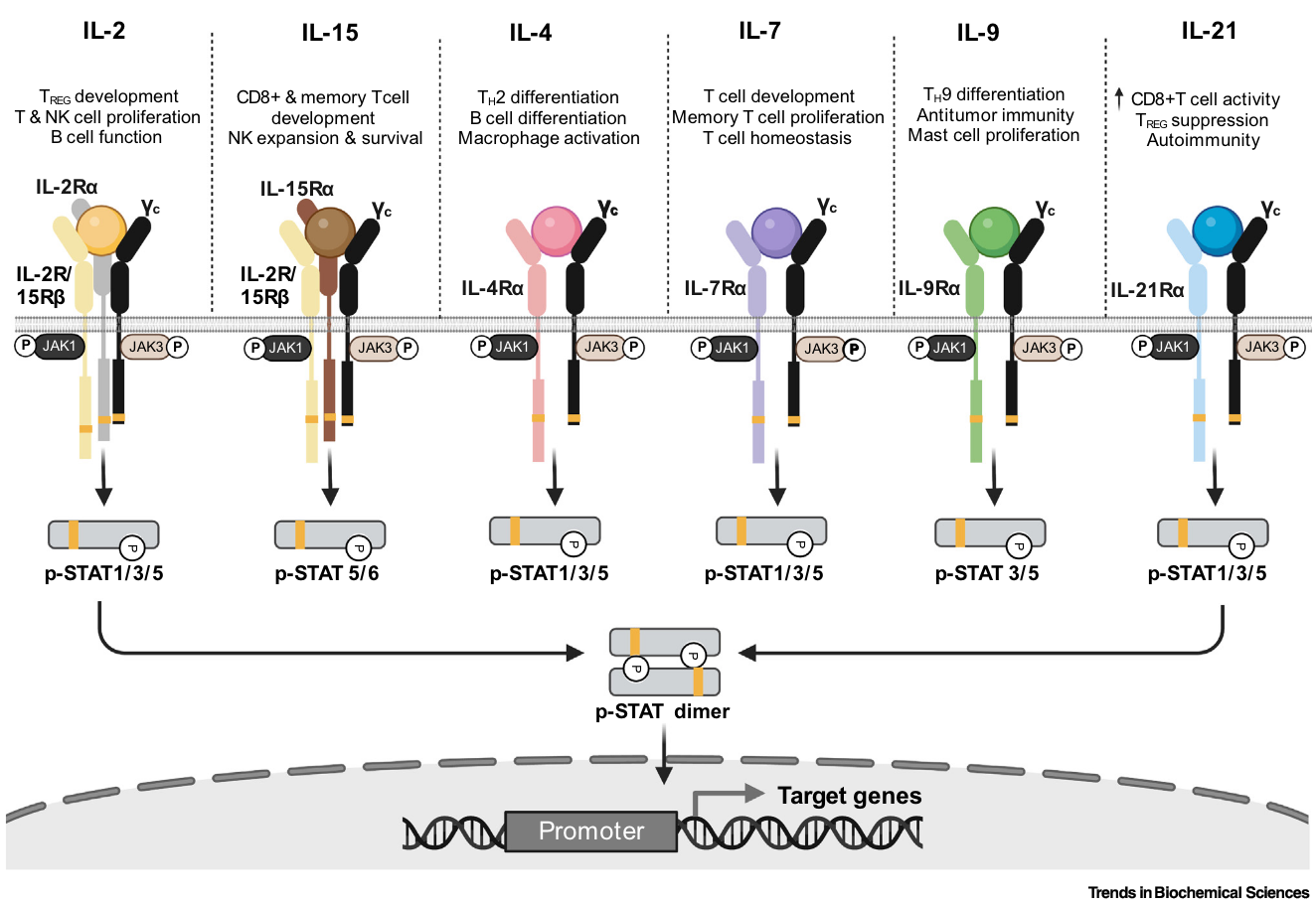 Ref (1)
Interleukin-1
A pyrogen produced by dendritic cells and macrophages in response to infection
Interleukin-2
- Low doses stimulate regulatory T cells and high doses stimulate CD8+-cytotoxic T cells and Natural Killer cells.
- Approved for metastatic renal cell carcinoma in 1992.
- A high-affinity IL-2 was used to generate a partial agonist H9T that had reduced binding at H9T-IL2RG interface.
- An IL-2/antibody conjugates can specifically activate CD8+-cytotoxic-T-cells. Masked versions have been created and tested.
Interleukin-6
A pyrogen. Initializes inflammation response along with IL-1 and TNF-. Also has various anti-inflammatory effects.
Interleukin-12
An IL-12/collagen-binding domain conjugate took advantage of high levels of collagen in the tumor microenvironment to preferentially target tumor sites. Masked versions have been created and tested.
Interleukin-18
Explored as a therapeutic, but low efficacy due to present of IL-18 binding protein, which is upregulated in tumor microenvironment. Decoy-resistant versions have been engineered by Zhou et al (Nature, 2020). Promotes cytokine production in T cells, but which types depend on the presence of IL-12 and/or IL-15.
Synthetic interleukins
A mimic of IL-2/IL-15 was made with Rosetta by Silva et al (Nature, 2019) that binds all three receptor chains. A second-generation version did not need to contact the alpha chain, and had greater thermostability.