Summary
Differences in thermostability of proteins with the similar structures are due to differences in rates of unfolding, rather than folding (1,2). (1) observed this using fifteen thioredoxin proteins, 7 of which were generated by ancestral sequence reconstruction, whi (2) saw this in HMPPK enzymes involved in synthesizing vitamin B12. In both cases, proteins folded at similar rates, but unfolded at rates that varied up to three orders of magnitude. The authors offer this as evidence supporting the principle of minimal frustration (see Evolution and natural selection).
Figures
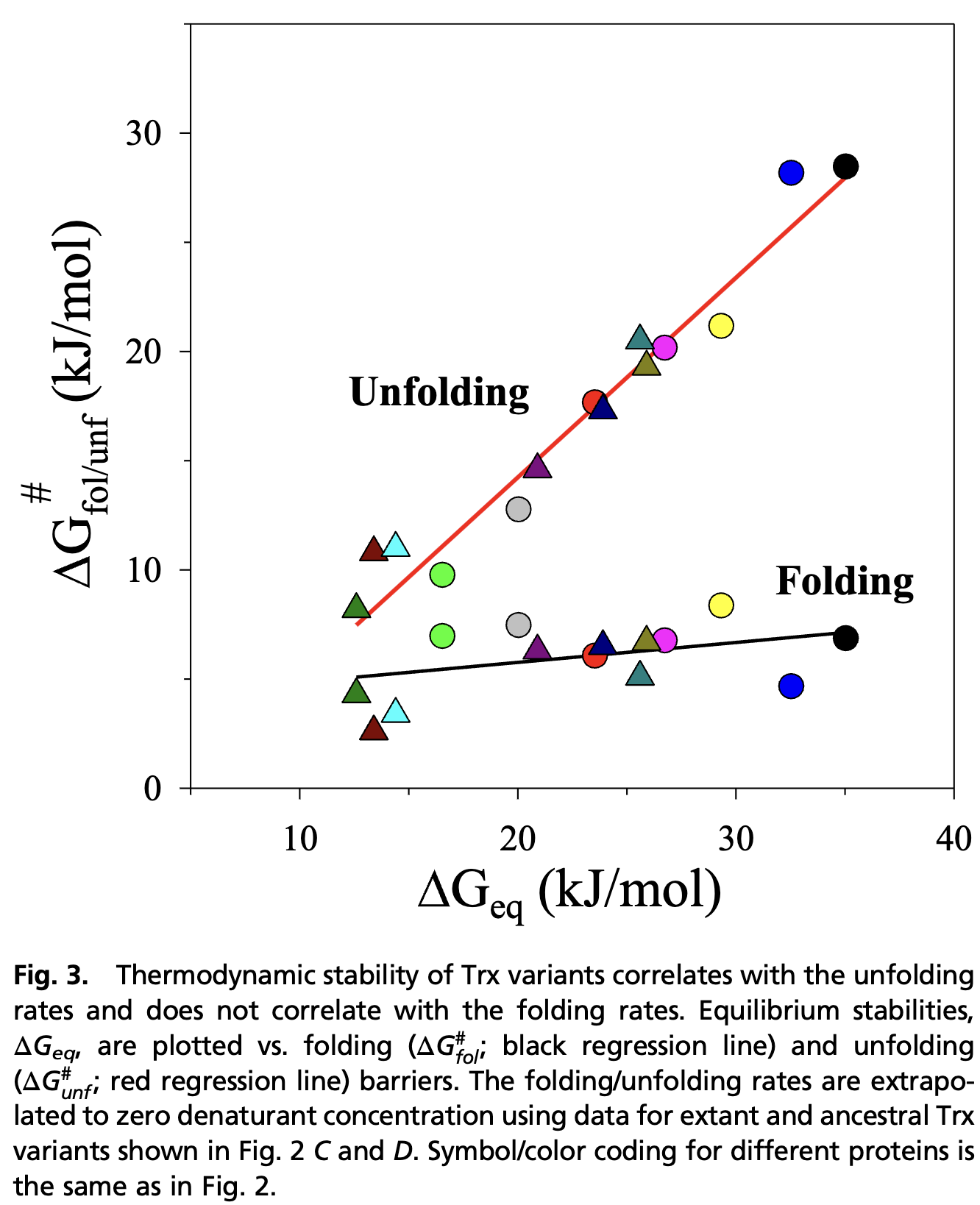
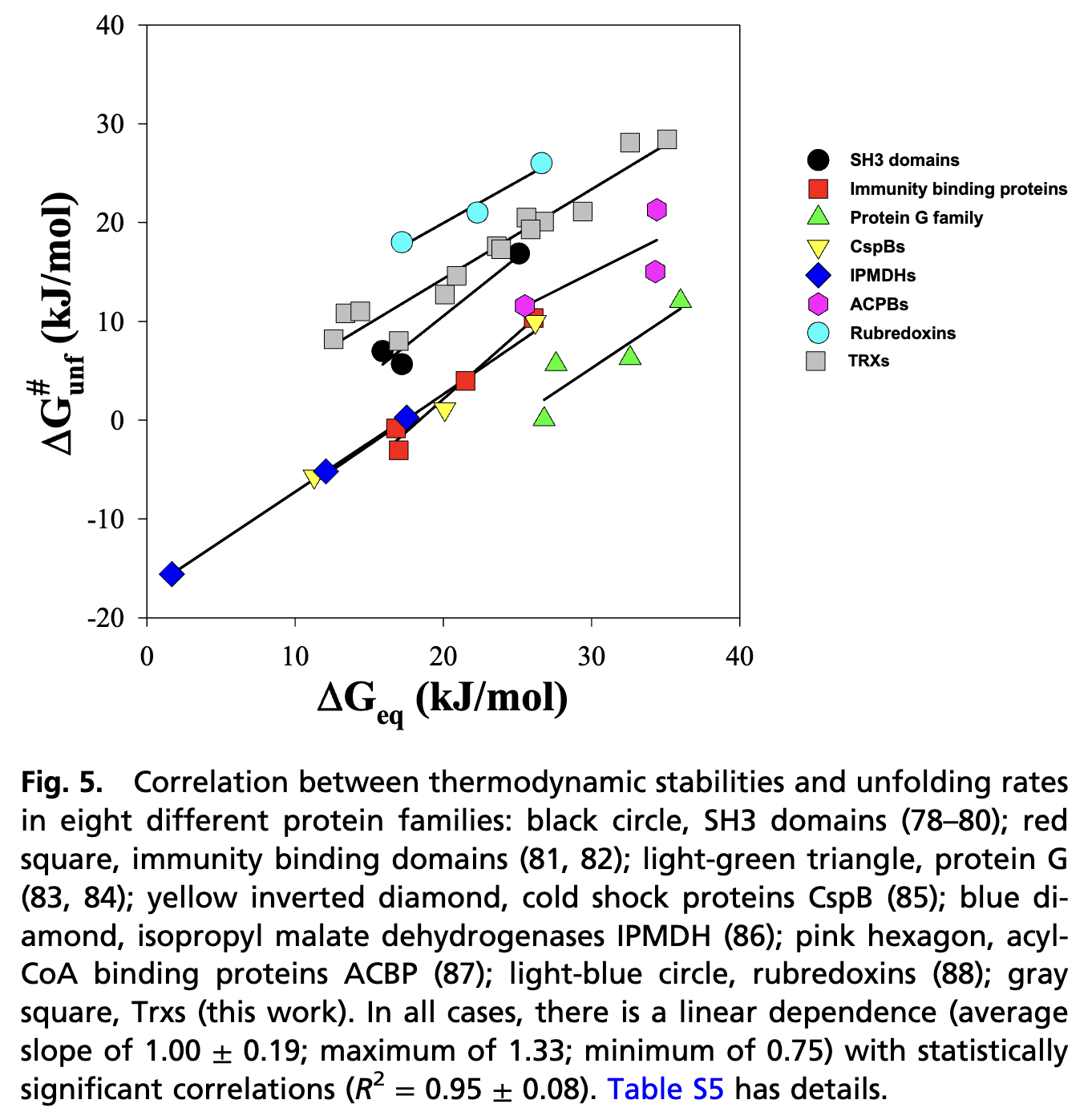 Figures from (1)
1.
Tzul FO, Vasilchuk D, Makhatadze GI. Evidence for the principle of minimal frustration in the evolution of protein folding landscapes. Proceedings of the National Academy of Sciences. 2017;114(9). Available from: https://doi.org/10.1073/pnas.1613892114
2.
Cea PA, Pérez M, Herrera SM, Muñoz SM, Fuentes-Ugarte N, Coche-Miranda J, et al. Deciphering Structural Traits for Thermal and Kinetic Stability across Protein Family Evolution through Ancestral Sequence Reconstruction. Molecular Biology and Evolution. 2024;41(7). Available from: https://doi.org/10.1093/molbev/msae127