Summary
MD simulations can filter enzyme design candidates for catalytically competent substates (1,2). The former study ran short (20 ns) MD simulations allowed filtering of potential Kemp eliminase designs, though no ablation study was run for comparison. They targeted catalytically competent substates. However, they found a false negative (HG649) and two false positives, in line with one of their previous studies finding that ensembles generated by MD don’t work for this (Broom et al Nature communications 2020).
Figures
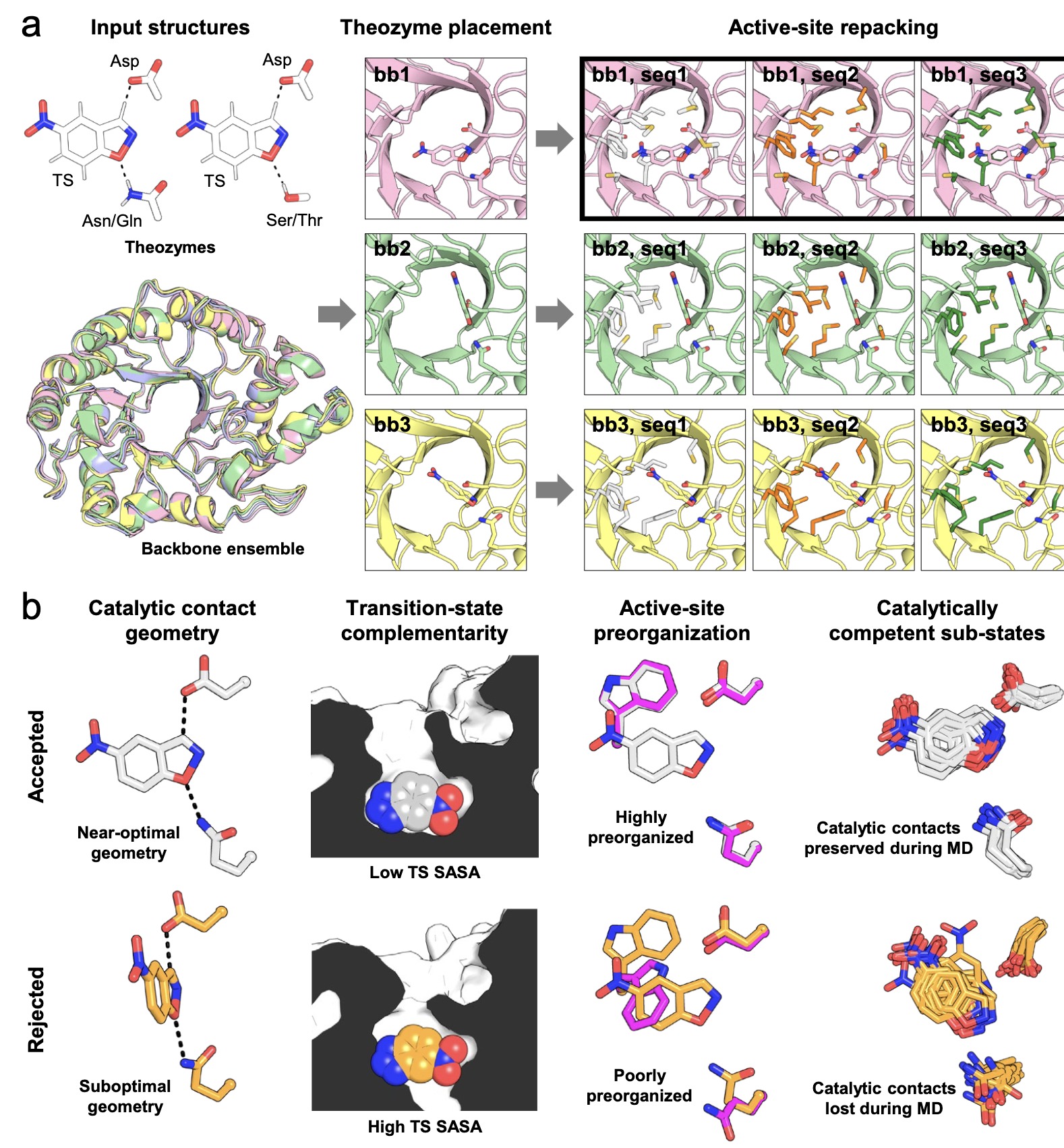 Ref (1)
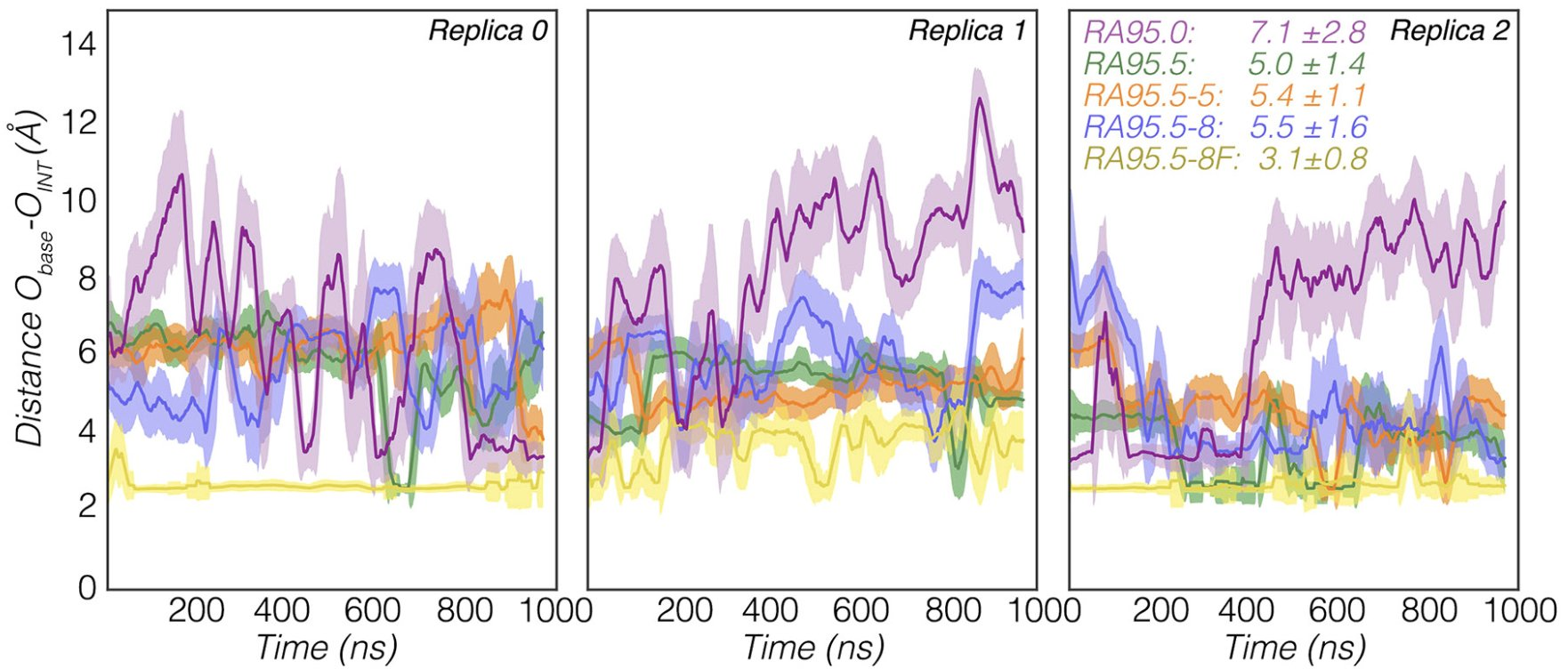 Ref (2)
See also
- Modifying conformational landscapes of proteins can give rise to new functions
- Abs modeled using MD are better for featurization than those modeled using homology modeling
1.
Rakotoharisoa RV, Seifinoferest B, Zarifi N, Miller JDM, Rodriguez JM, Thompson MC, et al. Design of Efficient Artificial Enzymes Using Crystallographically Enhanced Conformational Sampling. Journal of the American Chemical Society. 2024;146(14):10001–13. Available from: https://doi.org/10.1021/jacs.4c00677
2.
Romero-Rivera A, Garcia-Borràs M, Osuna S. Role of Conformational Dynamics in the Evolution of Retro-Aldolase Activity. ACS Catalysis. 2017;7(12):8524–32. Available from: https://doi.org/10.1021/acscatal.7b02954