Summary
(ProteinMPNN) and derivative methods underdesign aromatic residues (1,2). This is suggested by the authors of BindCraft to be why diffusion-based backbone design plus inverse folding with ProteinMPNN underperform hallucination-based methods on binder design.
Details
Chow et al. also note overdesign of alanines by RFD-MPNN pipelines: (3)
Upon compiling the binder sequences, we identified a clear increase in alanine composition among binders generated by the RFdiffusion workflow compared to BindCraft (Fig. 6a).We reason that the overrepresentation of alanine creates poorly packed hydrophobic interfaces with largely nonfunctional side chains, reducing stability and likely contributing to the weak or absent binding from binders created in the RFdiffusion campaigns despite passing other recommended in silico success metrics
Figures
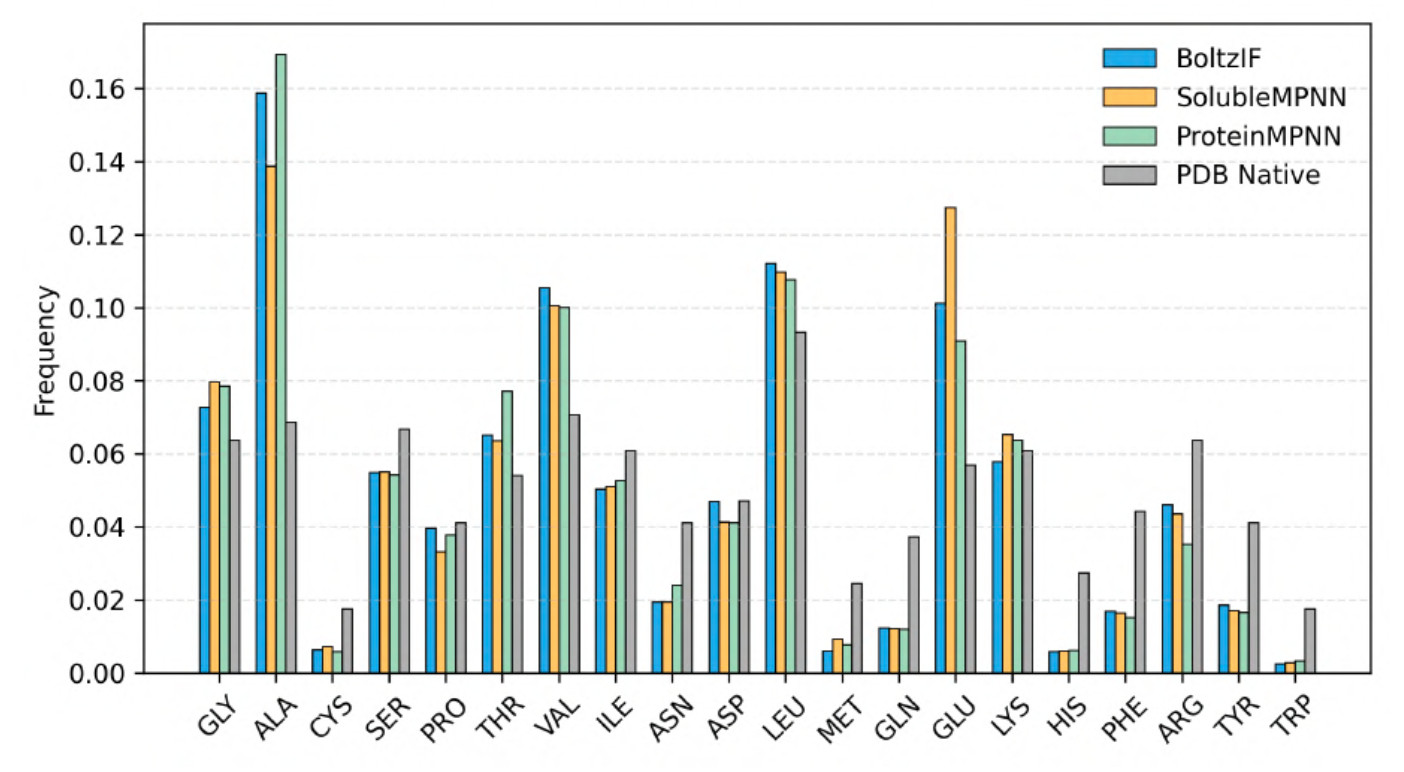 Ref (1)
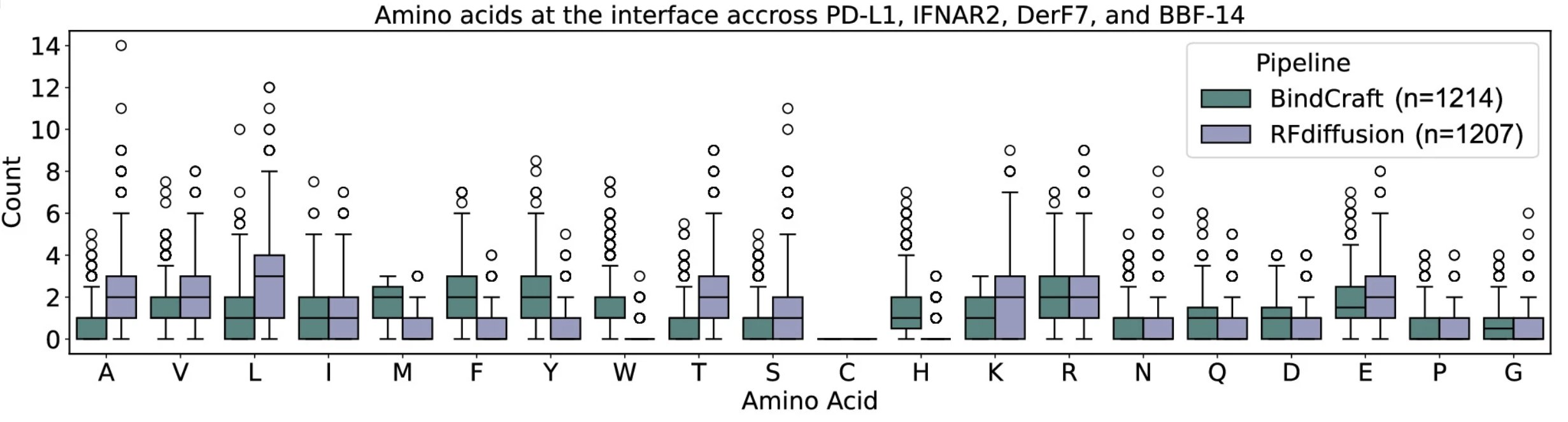 Ref (2)
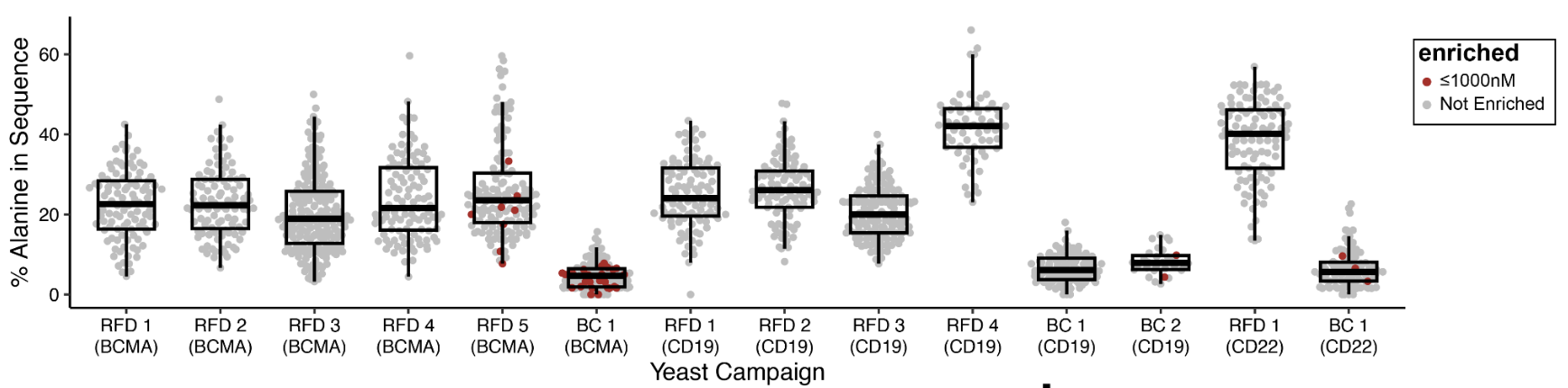 Ref (3)